
Dystopian stories often begin with something frightening: ruined cities, strict governments, empty streets, missing freedoms, or technology that has gone too far. Such an environment fascinates us since it is both threatening and unfamiliar. We want to understand what happened and whether anyone can survive what comes next.
However, it is not the catastrophe itself that usually hooks the reader. We stay for the frightened person crossing the ruins, the family hiding from those in power, or the stranger deciding whether to share their last piece of food. A world can just create the danger. People make it meaningful.
The most interesting questions in dystopian literature are not only how humanity can survive. It is what will be left of humans when there is no comfort, safety, or certainty anymore? Are we going to help each other? Protect our freedom? What can fear force us to give up?
Why Do Broken Worlds Make Human Choices Easier to See?
Life under normal circumstances allows people to put off hard decisions by waiting for additional information, delegating the task to someone else, or simply relying on laws, workplaces, hospitals, and governments to resolve the issue. However, a dystopian society takes away all those conveniences and leaves people with the responsibility for all of their actions.
Scarcity makes those choices even sharper. If there is not enough food, water, medicine, or shelter, then helping someone else may mean that you get less for yourself. Truth may mean getting yourself and your family into danger. Loyalty may deprive you of the opportunity to escape. Nothing happens free of charge.
That is why the ruined world matters. It places a bright light over actions that might seem small elsewhere. Sharing water becomes an act of care. Refusing an order becomes a defence of freedom. T Staying silent becomes a choice too, especially when speaking could protect someone who has no voice.
The setting may be extreme, but the question is familiar. What kind of person we are when making the right decision is hard, dangerous, or completely unnoticed? Dystopian literature denies easy solutions and leaves people with hard decisions.
Does Survival Still Count If We Lose What Makes Us Human?
In a dangerous world, it becomes difficult to believe anything else except survival. Characters have to be provided with necessities like food, safety, medicine, and a sleeping place. In cases when there is a lack of basic needs, values such as dignity, loyalty, and freedom seem to become luxuries people cannot afford.
A strong dystopian system never allows people to be safe simply because they are alive. A character might stay alive by sacrificing his or her freedom, betraying a friend, accepting violence, hiding truth, or surrendering the right to make decisions on their own.
The situation brings about a dilemma about whether survival is enough. A person might survive physically while losing the ability to be free, compassionate, remember something, believe in something, and distinguish good from evil. These qualities do not prevent someone from hunger or wound healing; however, without them, survival might lose its sense.
Each character puts the line in a different way. Some are ready to fight for freedom while others prefer safety despite the consequences of such a decision. Each choice is difficult, and that is why this ambiguity adds humanity to the story and provokes a reader’s curiosity.
Does Fear Change People or Reveal What They Already Value?
Dystopian fiction often suggests that danger reveals a person’s true nature. The cruel become worse. The brave rise to the occasion. The selfish protect themselves. It is a satisfying idea, but people are rarely that simple, especially when they are frightened.
Fear can pull completely different reactions from the same person. Someone may help a stranger today and abandon a friend tomorrow. They may act bravely, panic afterwards, and spend days regretting what they did. They can fail badly and still try to make things right.
What fear often reveals is not a single fixed personality but a set of shifting priorities. Who does the character protect first? What are they willing to risk? Which belief still matters when following it comes with a cost? The answers may change as the pressure grows.
That is why uncertain characters are usually more believable than fearless heroes. Their humanity lies in the struggle between fear and conscience. They do not always make the best choice. They simply keep deciding what kind of person they want to be, even when the world gives them little room.
Why Do Small Acts of Kindness Matter More in Cruel Worlds?
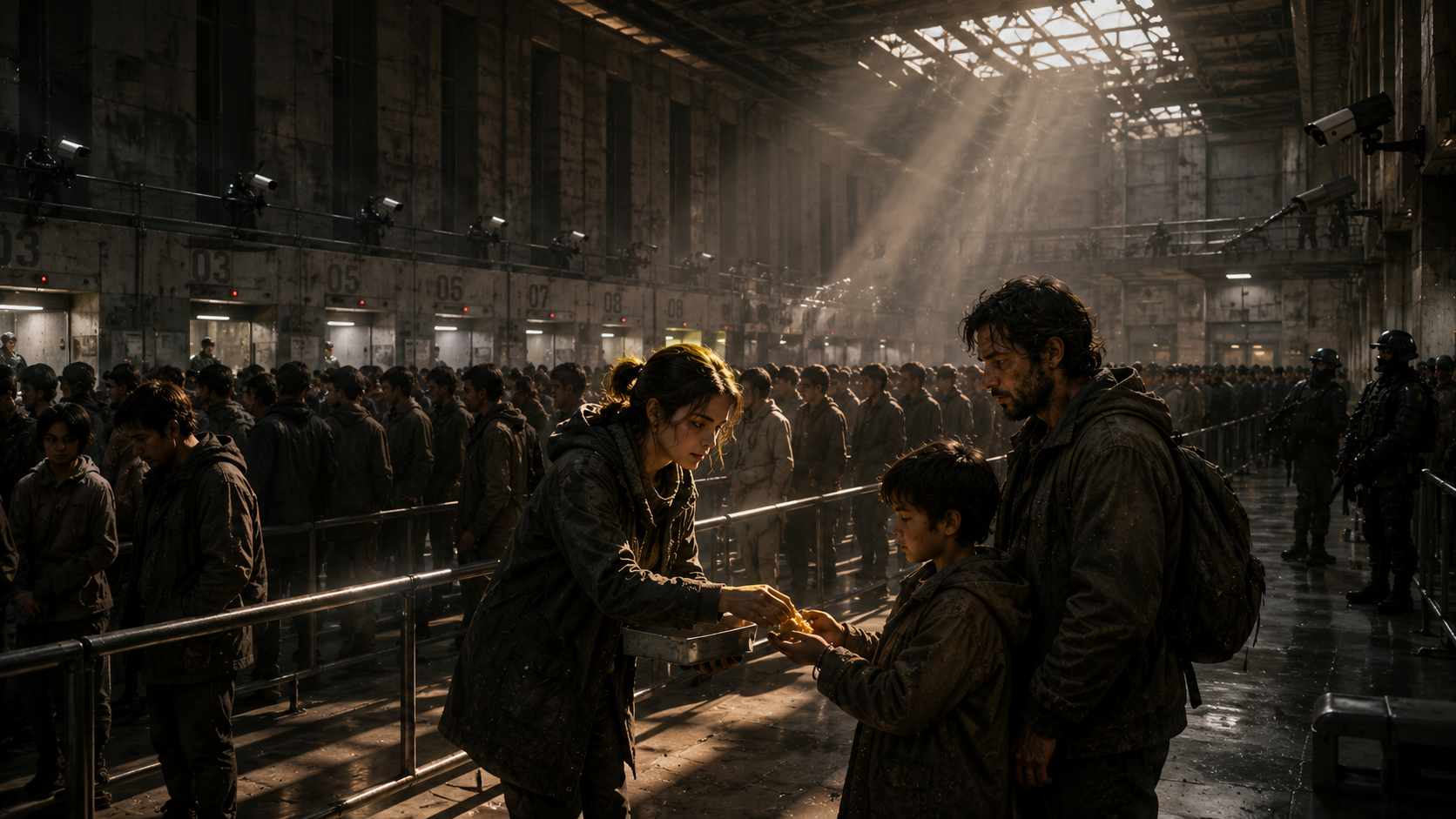
While a destroyed city can conjure up quite a vivid picture, there is something much more subtle that usually stands out. One person shares water. Someone stays beside an injured stranger. A frightened character comforts a child even though they have no idea how they will survive the night themselves.
These moments matter because kindness is rarely convenient. Helping out another human being can be time-consuming, waste precious resources, or make the character have someone else to look after. Simply walking away and continuing their journey would be easier for them. It could even be safer. Yet they take a moment and decide to help regardless.
That effort makes the gesture meaningful. The character does not show compassion simply because everything is alright for them or because they are going to get recognition for their efforts. The decision to show some compassion is made in spite of everything that the world makes them believe.
Humanity does not survive only through battles, revolutions, or dramatic victories. Sometimes it survives because one frightened person still notices another. The world may have become cruel, but that cruelty has not yet decided how everyone inside it will behave.
Is Hope a Feeling or a Form of Resistance?
Hope in dystopian fiction rarely means believing everything will work out. The evidence usually points in the opposite direction. The system is powerful. The damage is widespread. People have already lost too much, and victory may be unlikely or even impossible.
In these stories, hope becomes something a person does. It may mean protecting a child, refusing an order, preserving a memory, helping a stranger, telling the truth, or planting something in damaged ground. None of these actions guarantees a happy ending. That is what makes them matter.
Broken and oppressive worlds often depend on people believing that nothing can change. Once everyone accepts that cruelty is permanent, resistance begins to feel pointless. Continuing to care becomes a refusal to let that cruelty shape every relationship and every possible future.
Hope does not make a dark story less serious. It gives the darkness something worth threatening. Without love, freedom, truth, or kindness to protect, destruction becomes little more than spectacle. Hope reminds both the characters and the reader why survival matters in the first place.
Why Do Readers Remember the People More Than the Ruins?
Readers may begin a dystopian novel because the world sounds frightening. They want to know what caused the collapse, how the government gained control, or whether anyone can escape. Strong worldbuilding creates curiosity, but curiosity alone rarely creates a lasting emotional connection.
Ruins do not mourn; the system doesn’t get scared; the destruction does not forgive its victim, betray a friend, offer food, or sacrifice itself for others. It takes those actions done by people to make the vast tragedy into something one can relate to emotionally.
Through characters, oppression becomes one person losing the right to choose; scarcity, the choice to share or keep the only thing you have; rebellion, a choice of a person who is scared enough to finally say no; and hope, an act which becomes easier than giving up.
The finest pieces of literature of this genre are actually the stories about humanity. It’s the ruined world which creates the pressure, but people create the story itself. We remember them as all of their choices pose a question: what would we fight for?
Final Thoughts: What Remains When the World Falls Apart?
It might be the ruined streets, ravaged landscapes, harsh governments, and unclear futures that first draw our attention to dystopian literature. These aspects bring a sense of urgency to the narrative. They give the characters a frightening world that they need to survive and the reader a world that he or she needs to understand.
What sticks with us is more subtle. Some characters share what little they have. Some characters refuse to obey when scared. Some keep their word despite breaking it being easier. One character sacrifices what is most dear to him or her so that the other could live. Dystopian literature does not just question the survival of humanity. It questions whether love, freedom, loyalty, mercy, courage, and hope can survive within us. The catastrophe might ruin the world as the characters knew it. Their decisions will determine whether the catastrophe ruins them as well.